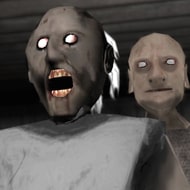
You arrive at a banana farm expecting nothing worse than bad puns, and within the first few rooms Banana Blood makes it clear that the jokes and the genuine scares are going to arrive in the same breath. Whatever happened here left the place surrounded by mystery and death, and figuring out what actually occurred means exploring every inch of a farm that clearly isn’t as abandoned as it looks.
| Genre |
First-person comedy horror |
| Setting |
A banana farm |
| Notable Threats |
Banana Demon, Pink Banana, Banana Children, Banana Mannequin |
| Underlying Goal |
Summon the Banana God (from the threats’ perspective) |
A Farm Full of Secrets in Banana Blood
The farm setting does a lot of quiet work before anything overtly threatening shows up. Ordinary agricultural buildings — barns, storage sheds, processing areas — get reframed as genuinely unsettling spaces once players start noticing details that don’t add up. Exploration rewards curiosity here, since secrets tucked into unassuming corners often explain fragments of what happened before the player arrived.
New players tend to treat the comedic tone as a signal that nothing here is really dangerous, which usually doesn’t last past the first genuine scare. Experienced players know the humor and the horror aren’t working against each other; they’re built to land in the same moment.
One detail regular players recognize is how quickly a joke can turn into a jump scare without any real tonal warning, which keeps even a second or third playthrough from feeling fully predictable.
The Banana Demon and Direct Confrontation
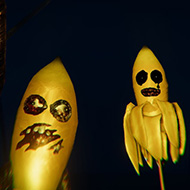
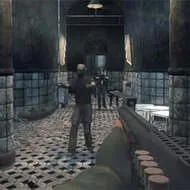
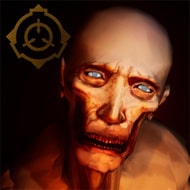
Of all the threats roaming Banana Blood, the Banana Demon is the most straightforwardly violent, and players quickly learn to treat any encounter with it as a moment for evasion rather than confrontation. It doesn’t rely on subtlety, which makes it easier to recognize but no less dangerous once it’s actually closing in.
- Direct evasion: putting distance and obstacles between the player and the Banana Demon rather than trying to outlast it in the open.
- Noise awareness: avoiding unnecessary sound in areas where the Banana Demon is known to patrol.
- Route memorization: learning safe paths through areas it frequents rather than relying on reaction speed alone.
Players who treat the Banana Demon casually during early exploration tend to regret it once its aggression becomes clear, which is part of why community discussion often singles it out as the threat that teaches new players to take the game seriously.
Later encounters raise the stakes further, since the same evasion tricks that worked in an open barn stop being reliable once the Banana Demon corners players in the farm’s narrower processing corridors.
Pink Banana’s Unsettling Performance
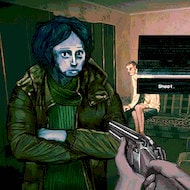
Pink Banana takes a different approach entirely, built around performance rather than raw aggression. Its dancing is exactly the kind of detail that sounds harmless on paper and reads as deeply wrong in practice, especially once players realize it’s not simply background flavor but tied to the farm’s larger, stranger rhythm.
Some players find Pink Banana the most memorable figure in the entire game specifically because it never behaves like a conventional threat, while others find its unpredictability more disorienting than genuinely scary. Both reactions come up constantly in discussions about which of the game’s threats works best.
What both camps agree on is that Pink Banana’s presence changes how a room feels the moment it appears, regardless of whether it’s actually dangerous in that specific instant.
Banana Children and the Mannequin’s Silence
The Banana Children introduce a quieter, creepier register than the Banana Demon’s direct aggression, relying on unsettling behavior rather than open pursuit. The Banana Mannequin pushes that same idea even further, sitting in spaces so still that players often second-guess whether it moved at all until it’s far too close to matter.
Puzzle-focused players tend to approach rooms containing the Mannequin methodically, checking every angle before committing to movement, while players chasing a faster playthrough sometimes gamble on speed instead and pay for it when the gamble doesn’t pay off.
Community vocabulary around the Mannequin often centers on “the flinch test” — the moment players catch themselves staring too long, waiting to see whether it’s actually moved, unsure if hesitation or movement is the safer choice.
Summoning the Banana God
Every thread in Banana Blood eventually connects back to the implied goal driving the farm’s threats: summoning the Banana God. That underlying mythology gives even the game’s silliest details a genuine throughline, turning scattered strange occurrences into pieces of a larger, deliberately absurd cosmic plot.
Players who dig into environmental storytelling tend to piece together how each threat — the Demon, Pink Banana, the Children, the Mannequin — relates to that larger goal, while players focused purely on survival often finish the game without fully engaging with that mythology at all.
Both approaches are valid, though players who skip the lore tend to describe the ending as more confusing than players who took time to read every environmental clue along the way.
Why Comedy and Horror Both Land in Banana Blood
What keeps Banana Blood from tipping fully into parody is how consistently it commits to both halves of its identity. The jokes never feel like an excuse to skip real tension, and the scares never feel like they’re undermining the humor either. That balance is genuinely divisive — some players want more pure horror, others want more pure comedy, and the game deliberately refuses to fully satisfy either camp.
That refusal is exactly why the game keeps coming up in discussions about horror comedy done well, since leaning too far in either direction would have made it forgettable in a genre that already has plenty of examples doing just one or the other.
Banana Blood earns its reputation by never letting players settle into just one register, whether that means the Banana Demon’s direct aggression, Pink Banana’s unnerving performance, or the quiet dread the Mannequin creates simply by not moving. A farm that should have meant nothing worse than bad puns turns out to be hiding a cosmic joke with real teeth behind it.









![Hello Kitty [HORROR] img](https://noimnotahumangames.com/wp-content/uploads/2026/08/hello-kitty-horror.jpg "Hello Kitty [HORROR]")