In TungTung’s Nightmare, you start with one task that sounds almost mundane: wake up before dawn and gather food for suhoor, the pre-dawn meal eaten before a day of fasting begins. That small, ordinary routine is the entire premise, and it matters more than it first appears, because failing to wake in time is exactly what invites Tungtung into the run.
| Genre |
Surreal horror with puzzle and stealth elements |
| Main Threat |
Tungtung |
| Core Objective |
Gather food for suhoor before time runs out |
| Structure |
Randomized level and puzzle layout each playthrough |
Tungtung’s Design in TungTung’s Nightmare
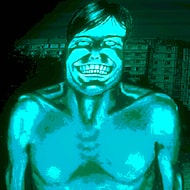
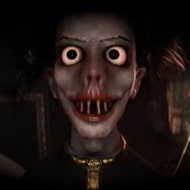
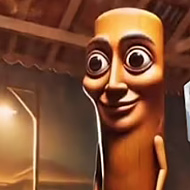
Tungtung himself is the game’s most memorable creation: a human-sized, sausage-shaped figure with wide unblinking eyes and a permanent, crooked grin, arms swinging loosely at his sides as he moves. He doesn’t need a backstory or dialogue to feel threatening, and that minimalism is deliberate — players describe the design as funny and unsettling at the same time, which keeps the tone from settling into pure comedy or pure dread.
New players often laugh at the first glimpse of him and stop laughing within a minute of being chased. That tonal whiplash is one of the most frequently mentioned reactions in community discussion around the game.
What keeps Tungtung from becoming a one-note joke is how the audio design treats him — his footsteps and the faint sound of shuffling arms carry through corridors well before he’s actually visible, giving alert players just enough warning to change course.
Suhoor Pressure and the Wake-Up Premise
The suhoor framing gives every run a built-in clock, and the pressure comes less from combat and more from the simple dread of not waking up in time. Players who treat the opening minutes casually often discover that the margin for error is thinner than it looks, since Tungtung’s presence escalates quickly once the gathering task falls behind schedule.
Speed-focused players prioritize finding food quickly and accept messier routes through unfamiliar rooms, while cautious players spend more time scouting safe paths first and accept a slower pace in exchange for fewer surprises.
Early in the game, rooms feel mostly stable and predictable. By the time the suhoor deadline gets close, reality itself becomes far less reliable, and players who assumed the level layout would stay consistent are usually the ones caught off guard.
Puzzles, Stealth, and a World That Warps
TungTung’s Nightmare blends puzzle-solving and stealth into a single loop rather than separating them into distinct sections. Players need to solve environmental puzzles to keep progressing toward suhoor while also staying aware of Tungtung’s position, since the two systems constantly interrupt each other.
- Environmental puzzles: often require exploring rooms fully before a solution becomes obvious, which conflicts directly with the instinct to move quickly and avoid detection.
- Stealth positioning: staying out of Tungtung’s direct line of sight while still making progress on whatever puzzle is currently active.
- Reality distortion: level layouts and puzzle logic can shift unpredictably, meaning a solution that worked on one attempt isn’t guaranteed to work the same way again.
Because the layout randomizes each playthrough, memorization only goes so far. Players who rely purely on remembered solutions from a previous run tend to struggle more than players who stay flexible and re-read each room as it comes.
Puzzle-focused players tend to accept slower progress in exchange for thoroughness, while stealth-focused players sometimes skip a puzzle’s full solution if a faster, riskier shortcut past Tungtung presents itself instead.
Community Reaction to TungTung’s Nightmare
A meme-inspired premise this specific tends to divide opinion, and that’s true here too. Some players love how faithfully the game channels the source meme’s mix of absurd and unsettling energy, while others feel the joke wears thin across a longer session, particularly once the novelty of Tungtung’s design has worn off. Both reactions show up constantly whenever the game comes up in wider horror discussion.
The randomized structure keeps the experience from feeling identical on repeat attempts, which is part of why players who initially came for the meme often stay for the actual replay value the puzzle-and-stealth loop provides.
- Do you need to know the source meme to understand TungTung’s Nightmare? No, the wake-up-for-suhoor premise and Tungtung’s presence are explained clearly enough through gameplay alone, though recognizing the meme adds an extra layer of familiarity for players who already know it.
- Does the level layout ever repeat exactly? Rarely — the randomized structure means puzzle placement and room layout vary between playthroughs, which is why memorized solutions don’t always transfer cleanly from one run to the next.
- What happens if suhoor preparation isn’t finished in time? Falling behind schedule sharply increases Tungtung’s presence and aggression, turning what started as a manageable gathering task into a direct, high-pressure chase.
TungTung’s Nightmare turns a genuinely small, human task — waking up in time to eat before a fast begins — into the backbone of a horror game that never quite lets players settle into a routine. Between Tungtung’s unsettling design and a layout that refuses to stay the same twice, the suhoor deadline remains the detail that makes every run feel newly uncertain.






![Hello Kitty [HORROR] img](https://noimnotahumangames.com/wp-content/uploads/2026/08/hello-kitty-horror.jpg "Hello Kitty [HORROR]")