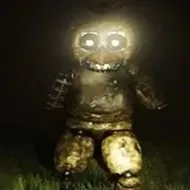
What happens when a childhood mascot stops being comforting? Hello Kitty [HORROR] answers that question by dropping players inside an abandoned amusement park where every familiar face has been twisted into something considerably less friendly. The park’s rides and attractions are still standing, but whatever ran this place clearly isn’t interested in guests leaving.
| Genre |
Mascot horror with hide-and-seek and puzzle elements |
| Setting |
Abandoned amusement park |
| Core Resources |
Flashlight and limited batteries |
| Primary Mechanic |
Avoiding detection while solving environmental puzzles |
An Amusement Park Turned Against You
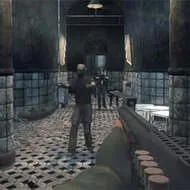
The setting does most of the early emotional work in Hello Kitty [HORROR]. Rides that would normally suggest a cheerful afternoon out instead sit dark and unused, and the game leans hard into that contrast — bright, familiar shapes rendered in a space that clearly hasn’t hosted a real guest in a long time. Corridors between attractions feel deliberately mazelike, encouraging exploration while also making retreat harder once something starts paying attention.
New players often underestimate how large the park actually is, treating the first area explored as representative of the whole map. Experienced players know that different zones hide different puzzle pieces, and skipping a full sweep of one area can mean backtracking through territory that no longer feels safe.
Sound design reinforces the setting constantly, with distorted carnival music drifting from speakers that shouldn’t still be working, which does as much to unsettle players as anything actually chasing them through the corridors.
Hide-and-Seek Rules in Hello Kitty [HORROR]
The chase mechanic hinges on visibility rather than constant pursuit — creatures roaming the park only engage once a player has actually been spotted, which rewards deliberate, careful movement over panicked sprinting. That single rule changes how the whole map gets approached, since staying out of direct sightlines matters more than simply outrunning a threat after the fact.
- Line-of-sight awareness: checking angles before crossing open spaces rather than assuming a room is empty.
- Controlled movement: moving deliberately through areas with poor cover instead of sprinting and drawing attention.
- Battery conservation: using the flashlight only when necessary, since running out at the wrong moment turns a manageable area into a genuine problem.
Players who get caught early in a run usually admit afterward that they were spotted crossing open ground rather than actually cornered, which says a lot about how much positioning matters compared to raw reaction speed.
Regular players eventually develop a rhythm of pausing at every doorway before crossing it, a habit that looks overly cautious to newcomers until it saves them from walking directly into a creature’s line of sight.
Puzzles, Keys, and Battery Pressure
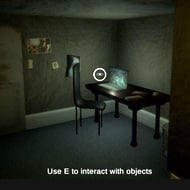
Progress through the park depends on decoding messages scattered through various attractions and tracking down keys that unlock previously sealed sections. None of this happens in a vacuum — every minute spent solving a puzzle is a minute the flashlight’s batteries are draining, which creates constant tension between careful puzzle-solving and the practical need to keep moving.
- Search each new area fully before committing significant battery use to a single puzzle.
- Prioritize keys that unlock shortcuts back toward already-cleared sections of the park.
- Save spare batteries for sections known to have poor natural lighting rather than spending them early.
Puzzle-focused players tend to conserve batteries aggressively, working through darker sections from memory whenever possible, while players who prioritize speed accept heavier battery use in exchange for finishing sections faster and reducing overall exposure time.
One recognizable moment for regular players is finding a spare battery pack in a searched area just as the flashlight starts flickering, a small relief that the game seems to time deliberately rather than purely at random.
What Makes Hello Kitty [HORROR] Land Emotionally
A big part of why Hello Kitty [HORROR] unsettles players is precisely because the source material carries no horror baggage going in. Seeing a familiar, cheerful mascot rendered as something actively hostile creates a specific kind of dread that a newly invented horror character simply can’t replicate, since the contrast between expectation and reality is doing most of the work.
Some players find that contrast the most effective part of the whole experience, while others feel the shock value fades quickly once the initial novelty wears off and the underlying hide-and-seek loop becomes familiar. Both opinions surface constantly in discussion around the game, and neither side is really wrong — the tension genuinely does shift once players know what to expect.
That shift doesn’t make repeat playthroughs pointless, though — knowing the twist doesn’t reveal exactly where each key or puzzle piece is hidden, and the park’s layout still demands the same careful sweep it did the first time through.
Hello Kitty [HORROR] gets its identity from that uncomfortable gap between a mascot everyone recognizes and a park that no longer wants them there. Between the battery pressure, the puzzle-and-key structure, and hide-and-seek rules that punish careless movement more than bad luck, the game keeps players second-guessing a setting that should never have felt threatening in the first place.