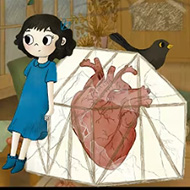
You step outside on what looks like an ordinary sunny afternoon, and by the time a few puzzles have passed, that same watercolor world has quietly slipped into something far more somber — Ignore the blackbird never announces the shift, it just lets the light and the mood drain away while a mysterious blackbird keeps circling somewhere at the edge of view.
| Genre |
Watercolor puzzle and observation game |
| Tone Shift |
Sunny summer day fading into a surreal, somber mood |
| Key Element |
A mysterious blackbird |
A Slow Tonal Shift in Ignore the Blackbird
The game’s biggest strength is patience. Rather than front-loading its story or its dread, it lets the watercolor art style do quiet emotional work over time, so that a scene which felt cheerful early on can read as unsettling by the time a player revisits it later. Puzzles rarely explain themselves directly, and solving them tends to depend on noticing small environmental details rather than following explicit instructions.
Environmental observation: the game consistently rewards players who stop and look closely at their surroundings rather than rushing between puzzle triggers, since the blackbird and the story it represents are followed through visual clues rather than direct exposition.
New players sometimes miss early clues because the sunny opening doesn’t cue them to pay close attention yet, and only in retrospect do those early details start to matter once the tone has shifted enough to recontextualize them.
Why the Blackbird Anchors Ignore the Blackbird
The blackbird itself is never fully explained upfront, and that restraint is deliberate. Players piece together its significance the same way they solve every other puzzle in the game — by paying attention rather than being told outright — which keeps the mystery feeling earned rather than simply withheld.
Some players love how much is left for interpretation, treating the ambiguity as the entire point of the experience, while others wish a few more answers were made explicit by the closing scenes. Both reactions come up regularly whenever the game gets discussed among people who’ve finished it.
What stays consistent across both reactions is agreement that the watercolor visuals carry an enormous amount of the storytelling weight, doing more with light and color shifts than most puzzle games attempt with dialogue.
- Does Ignore the blackbird explain its story directly? Rarely — most of the narrative comes through environmental details and the blackbird’s recurring presence rather than direct exposition, which rewards players who explore carefully.
- Is the tone consistent throughout, or does it change? It changes gradually. The game deliberately starts light and sunny before drifting into something more somber and surreal as puzzles progress.
Ignore the blackbird earns its quiet unease by trusting players to notice things rather than explaining them, letting a sunny afternoon curdle into something stranger one small detail at a time. The blackbird itself remains the thread tying that shift together, circling just close enough to never quite be ignored.







![Hello Kitty [HORROR] img](https://noimnotahumangames.com/wp-content/uploads/2026/08/hello-kitty-horror.jpg "Hello Kitty [HORROR]")