
Don’t Look Back
Five Nights At Teletubby Mansion

Choo Choo Charles Revenge
No, I’m not a Human 2
Hospital Aggression
Let Me Out

SCP-096 Modest


















![Hello Kitty [HORROR] img](https://noimnotahumangames.com/wp-content/uploads/2026/08/hello-kitty-horror.jpg "Hello Kitty [HORROR]")


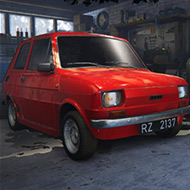
Cheap Car Repair looks like a lighthearted small-town job simulator but plays like a constant negotiation between what a repair actually needs and what a customer is willing to pay for. Set in a modest garage during 1990s Poland, the game puts players in the shoes of John the Mechanic, a role that turns out to be equal parts wrench work and quiet social observation.
| Genre | Repair and management simulation |
| Setting | A small-town garage in 1990s Poland |
| Main Character | John the Mechanic |
The core loop revolves around diagnosing vehicle problems and deciding how to spend limited resources fixing them. Every repair choice affects future opportunities, since customers remember shoddy work and expensive shortcuts rarely pay off the way they seem to in the moment.
New players tend to replace parts too quickly without fully diagnosing the underlying issue, which usually costs more in the long run than a slower, more careful inspection would have.
Regular customers eventually notice a pattern in how their vehicles get handled, and a garage with a reputation for cutting corners tends to see fewer high-value repair jobs walk through the door over time.
The game doesn’t confine John the Mechanic to the garage itself. Story-driven missions send players out into the surrounding countryside, introducing a cast of strange local characters whose problems rarely have a straightforward fix. These sections shift the tone noticeably, trading spreadsheet-style budgeting for something closer to a slice-of-life story about a specific place and time.
Players who enjoy the management side sometimes treat these countryside missions as a break from the workshop’s pressure, while story-focused players often see them as the actual heart of the experience, with the garage work as a supporting structure around it.
Cheap Car Repair earns its charm from that constant tension between running an honest garage and cutting corners to stay profitable. John the Mechanic’s world extends well past the workshop walls, and the countryside missions give the game a warmth that the budgeting alone wouldn’t provide on its own.
