

Don’t Look Back

Five Nights At Teletubby Mansion

Choo Choo Charles Revenge

No, I’m not a Human 2
Hospital Aggression
Let Me Out

SCP-096 Modest

















![Hello Kitty [HORROR] img](https://noimnotahumangames.com/wp-content/uploads/2026/08/hello-kitty-horror.jpg "Hello Kitty [HORROR]")


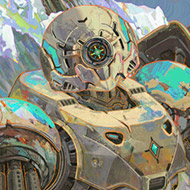
What happens when a tower defense game stops letting players control the units doing the actual fighting? Golemworks answers that question by handing players a factory instead of an army, tasking them with building the systems that generate and upgrade automatons rather than commanding those automatons directly.
| Genre | Factory-building tower defense |
| Core Resource | Molds that generate golem cores |
| Enhancement System | Catalysts that add levels and elemental traits |
| Modes | Standard waves and an endless mode |
Every automaton begins as a core generated by a mold, and molds operate on cooldown cycles rather than producing cores on demand. That single detail turns Golemworks into a timing puzzle as much as a combat one, since players need to plan production rhythms well before waves of enemies actually arrive.
New players often treat molds as a simple resource tap and get caught off guard when a cooldown leaves them without fresh cores exactly when a wave intensifies. Experienced players stagger multiple molds deliberately, ensuring cores keep arriving even while individual molds are recharging.
Factory layout matters more than it first appears, since inefficient placement can quietly slow the entire production chain without ever throwing an obvious error or warning.
Catalysts are what separate a functional factory from a genuinely strong one, enhancing cores with levels and elemental traits rather than leaving every automaton generic. Combining components thoughtfully is what turns a basic golem into something capable of handling the escalating waves of shadowy threats the game throws at players over time.
Players who experiment early with different catalyst combinations tend to build more flexible armies than players who settle on a single formula and stop adjusting once it works reasonably well.
Elemental mismatches punish overconfidence quickly, since a golem army built entirely around one trait can struggle badly the moment a wave introduces enemies specifically resistant to it.
As waves grow stronger, players must continuously refine production chains and adapt their catalyst strategy rather than relying on whatever worked during earlier levels. Multiple difficulty settings let players choose how aggressively that scaling ramps up, while the endless mode removes any fixed conclusion entirely, testing how long a factory can keep pace before finally buckling.
Balancing quantity and quality of units becomes the central tension once difficulty increases meaningfully. Players who overproduce weak cores often find themselves overwhelmed despite a technically full factory, while players who focus too narrowly on a few powerful units can be overrun simply by enemy numbers.
Reducing downtime between production cycles becomes one of the more advanced skills separating players who clear endless mode’s later stages from those who plateau early.
Steady core generation matters more early on than aggressive upgrading, since a reliable production rhythm gives players room to experiment with catalysts once the basics are stable.
Yes — endless mode removes any fixed stopping point, meaning success depends entirely on how well a factory’s production and catalyst systems scale over an indefinitely growing challenge.
Often, yes. Simplifying an overextended setup and rebuilding around a smaller, more efficient production line tends to work better than trying to patch a factory that’s already fallen behind.
Golemworks rewards patient system design over reactive combat instincts, whether that means staggering molds carefully or finding the right catalyst combination for an upcoming wave. Every improvement to the factory directly shapes how long a player’s golem army can hold the line against the shadows pressing in.
