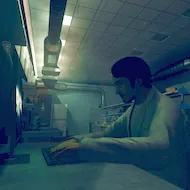
Hi, What’s Your Emergency places players in the center of a high-pressure dispatch hub where every second matters. You take on the role of the person on the other end of the line, responsible for evaluating calls, calming distressed individuals, and deploying the right support teams. The game challenges your ability to interpret information quickly while staying organized amid overlapping emergencies. It offers a strategic and communication-driven experience where the accuracy of your decisions determines the outcomes of countless unfolding situations across the city.
Sorting Critical Information From Confusing Calls
The heart of Hi, What’s Your Emergency lies in the process of analyzing call details that are often incomplete, emotional, or urgent. Many callers struggle to describe their surroundings or the exact nature of the issue. Players must extract clarity from chaos, using systematic questioning to build a clear picture of what needs to be done. The challenge is heightened by time pressure and the constant arrival of new calls that compete for your focus.
- Guide callers through step-by-step questions.
- Differentiate between real emergencies and misinterpretations.
- Evaluate tone, background noise, and verbal cues.
- Handle frightened, angry, or confused individuals with calm instruction.
- Decide when an unclear call still warrants immediate action.
Coordinating Units and Maintaining Citywide Readiness
Every emergency you acknowledge requires a team, but resources are limited. You must strategically assign paramedics, officers, and fire crews across a changing city map. Hi, What’s Your Emergency highlights the importance of long-term situational awareness by making you consider travel times, team specialties, and the risk of leaving entire zones unsupported. Even a successful rescue in one area may create trouble elsewhere if the wrong unit is sent.
- Position available teams for faster future responses.
- Assess which unit types are suited for specific crises.
- Avoid overcommitting to non-critical situations.
- Rotate responders to prevent coverage gaps across districts.
- Prepare secondary teams to handle call surges during peak chaos.
Managing Emergencies That Escalate or Change Direction
Not all emergencies remain stable. Some evolve into multi-stage situations requiring ongoing decision updates. A reported injury may turn into something more serious, or a small disturbance may develop into a citywide alert. Hi, What’s Your Emergency creates dynamic complexity by forcing players to react to new developments in real time. This unpredictability teaches players to remain adaptive, attentive, and prepared for unexpected turns.
- Monitor active operations while answering new calls.
- Reassign units if situations escalate abruptly.
- Identify when multiple incidents are connected.
- Decide whether to escalate a situation to high-priority status.
- Handle overlapping emergencies without ignoring ongoing cases.
A Realistic Simulation of Fast-Paced Dispatch Work
Hi, What’s Your Emergency creates a vivid simulation of emergency response coordination by blending communication, strategy, and real-time adaptation. The game rewards thorough analysis and steady decision-making, showing how dispatchers manage pressure while keeping a city operational. Whether dealing with routine disruptions or intense crisis chains, players must balance empathy and efficiency at every moment. The constant flow of events ensures each session remains unpredictable and engaging, offering a deep look into the mental discipline required for emergency dispatch work.

















![Hello Kitty [HORROR] img](https://noimnotahumangames.com/wp-content/uploads/2026/08/hello-kitty-horror.jpg "Hello Kitty [HORROR]")