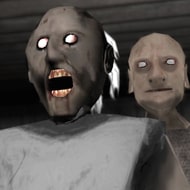
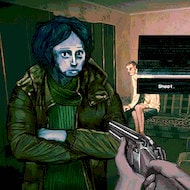
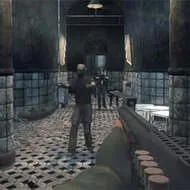
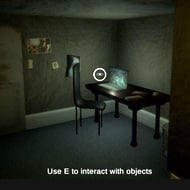
No, I’m not a Human Steamunlocked is a narrative-focused simulation built around social deduction, controlled interaction, and repeated psychological testing. Players are placed into confined scenarios where identifying non-human entities depends on observing dialogue patterns, emotional consistency, and behavioral reactions. The experience emphasizes tension and uncertainty, encouraging players to question every interaction and reassess conclusions across multiple playthroughs.
Contained Scenarios and Interaction Structure
No, I’m not a Human Steamunlocked uses tightly controlled environments to focus attention on character behavior rather than exploration. Each scenario limits available actions, forcing players to rely on conversation flow, response timing, and situational awareness. Repeating the same scenario often reveals new details, as characters subtly alter their behavior based on prior decisions.
- Confined environments enhancing psychological pressure
- Limited interaction options increasing decision weight
- Scenarios repeating with altered character responses
- Environmental context shaping dialogue reactions
Dialogue Consistency and Behavioral Analysis
Dialogue plays a central role in No, I’m not a Human Steamunlocked. Characters speak naturally, but inconsistencies in wording, emotional tone, or memory can indicate something is wrong. Players must compare responses across encounters, noting whether reactions align with previous statements or situational logic. Behavioral cues often appear subtle, requiring patience rather than quick judgment.
- Wording changes revealing potential inconsistencies
- Emotional responses tested against context
- Memory alignment across repeated conversations
- Behavioral patterns emerging over time
Progression Through Repetition and Comparison
Progression in the game is achieved through repetition rather than traditional advancement systems. Each new attempt builds on player knowledge, allowing comparison between outcomes and refinement of suspicion. There is no single correct path, as understanding develops gradually through accumulated observation and analysis.
- Recurring encounters with variable outcomes
- Knowledge retention shaping future decisions
- Pattern recognition replacing linear progression
- Gradual discovery through repeated evaluation
Player Questions, Strategies, and Pitfalls
Players often ask whether No, I’m not a Human Steamunlocked includes reliable shortcuts for identifying characters. While no direct cheats exist, experienced players focus on long-term consistency rather than isolated clues. Acting too quickly or relying on intuition alone often leads to incorrect conclusions.
- Consistency across scenes outweighs single indicators
- Repeated observation reduces false assumptions
- Some clues appear only after multiple sessions
- Patience improves accuracy and understanding
No, I’m not a Human Steamunlocked delivers a tense analytical experience centered on uncertainty, repetition, and careful reasoning. The game rewards players who slow down, observe patterns, and compare interactions over time, gradually revealing its depth through thoughtful analysis rather than explicit instruction.
















![Hello Kitty [HORROR] img](https://noimnotahumangames.com/wp-content/uploads/2026/08/hello-kitty-horror.jpg "Hello Kitty [HORROR]")