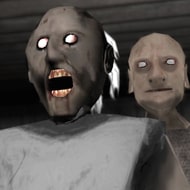
No I’m not a Human Cat Lady Visitor is a narrative-driven simulation focused on suspicion, routine observation, and subtle social pressure during a recurring visit scenario. Players are placed in a domestic setting where conversation, environmental behavior, and repeated interactions must be carefully analyzed to determine whether a visitor is truly human. The experience emphasizes discomfort through normality, encouraging players to question familiar routines and seemingly harmless dialogue.
Domestic Setting and Controlled Encounters
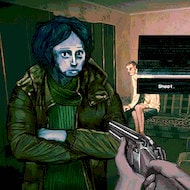
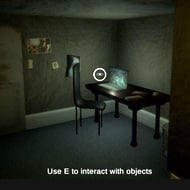
No I’m not a Human Cat Lady Visitor takes place almost entirely within a lived-in home environment. The limited space shifts attention toward small behavioral details rather than exploration. Each visit follows a similar structure, but minor variations in timing, movement, and dialogue can signal deeper inconsistencies. Familiarity becomes a tool, not a comfort.
- Single-location focus enhancing tension
- Repeated visit structure with subtle variations
- Environmental details reinforcing routine behavior
- Limited movement emphasizing observation
Dialogue Patterns and Behavioral Irregularities
Conversation in No I’m not a Human Cat Lady Visitor is intentionally mundane. Questions about daily life, habits, and pets form the core of interaction. The challenge lies in detecting inconsistencies across repeated visits, such as shifts in tone, memory gaps, or emotional responses that do not align with prior statements. Silence and hesitation often matter as much as spoken words.
- Repeated dialogue revealing memory inconsistencies
- Emotional responses tested against context
- Timing of replies affecting suspicion levels
- Ordinary topics masking abnormal behavior
Progression Through Repetition and Familiarity
Progression in the game is built on repetition rather than advancement systems. Each visit reinforces player memory, allowing comparisons between sessions. Familiar patterns make deviations more noticeable, rewarding players who pay attention over time. There is no single decisive moment, only accumulated understanding through repeated exposure.
- Recurring scenarios with slight behavioral changes
- Player memory replacing objective tracking
- Pattern recognition shaping conclusions
- Non-linear understanding through repetition
Player Questions and Interpretive Strategies
Players often ask whether No I’m not a Human Cat Lady Visitor provides clear indicators for identification. The experience intentionally avoids obvious signals. Effective play relies on consistency checks, emotional alignment, and patience. Acting too quickly or relying on intuition alone frequently leads to incorrect conclusions.
- Consistency across visits outweighs isolated clues
- Subtle discomfort is more reliable than shock moments
- Some indicators emerge only after multiple sessions
- Observation is safer than confrontation
No I’m not a Human Cat Lady Visitor delivers a restrained psychological experience where routine becomes unsettling. The game rewards attentiveness, memory, and restraint, gradually building tension through repetition and familiarity rather than overt conflict or explicit revelation.














![Hello Kitty [HORROR] img](https://noimnotahumangames.com/wp-content/uploads/2026/08/hello-kitty-horror.jpg "Hello Kitty [HORROR]")