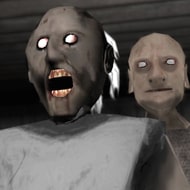
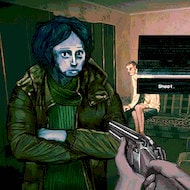
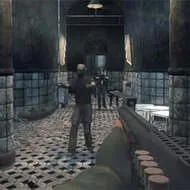
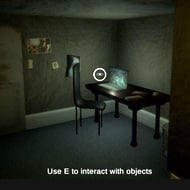
No, I’m not a Human 2026 is a narrative-driven simulation focused on perception, decision-making, and social interaction within controlled environments. Players navigate everyday scenarios while carefully observing characters, dialogue cues, and behavioral patterns to determine who is human and who is not. The experience centers on tension, repetition, and logical deduction, encouraging players to question appearances and re-evaluate assumptions during each interaction.
Observation-Based Interaction System
No, I’m not a Human 2026 relies heavily on close observation rather than fast reactions. Characters display subtle behavioral differences through dialogue pacing, movement patterns, and situational responses. Players must interact carefully, choosing when to ask questions, when to remain silent, and when to challenge inconsistencies. Small details often carry more weight than obvious signals.
- Dialogue choices influencing character reactions
- Behavioral patterns revealing hidden traits
- Environmental context affecting responses
- Repeated encounters changing character behavior
Decision Paths and Psychological Pressure
Every decision in No, I’m not a Human 2026 contributes to branching interaction paths. Accusations, trust, or hesitation can alter how characters behave in future scenes. The game creates psychological pressure by limiting information and forcing players to act with incomplete certainty, making each choice feel consequential even without immediate feedback.
- Multiple interaction paths based on player choices
- Consequences unfolding over repeated scenes
- Trust and suspicion influencing dialogue options
- Non-linear progression driven by decisions
Replay Structure and Pattern Recognition
Progression in the game is built around replay and pattern recognition rather than completion milestones. Each new attempt presents familiar situations with subtle variations, encouraging players to compare outcomes and refine their judgment. Recognizing repeated behaviors and deviations becomes essential for advancing understanding.
- Recurring scenarios with altered character behavior
- Pattern-based discovery through repetition
- Subtle changes revealing deeper narrative layers
- No fixed solution encouraging critical thinking
Player Questions, Strategies, and Insights
Players often ask whether No, I’m not a Human 2026 includes hidden indicators or shortcuts for identifying characters. While there are no explicit cheats, careful attention to dialogue structure, timing, and consistency provides valuable insight. Experienced players focus on long-term observation rather than immediate conclusions.
- Consistency across scenes is more important than tone
- Rushed decisions often lead to misleading outcomes
- Some clues appear only after repeated interactions
- Observation is rewarded more than confrontation
No, I’m not a Human 2026 delivers a tense interactive experience built on uncertainty, repetition, and careful reasoning. The game encourages players to slow down, observe deeply, and question every interaction, creating a layered narrative where understanding emerges gradually through patience and analytical thinking.















![Hello Kitty [HORROR] img](https://noimnotahumangames.com/wp-content/uploads/2026/08/hello-kitty-horror.jpg "Hello Kitty [HORROR]")