Save the Shapes is a logic-focused puzzle experience built around careful planning and an understanding of physical interactions. The objective in each level is to protect a set of geometric figures from damage while navigating environments filled with traps, unstable platforms, and reactive elements. Shapes respond realistically to gravity and force, meaning that every action can change the balance of the scene. Success depends on foresight, patience, and the ability to predict how the environment will react.
Core Puzzle Mechanics
The foundation of Save the Shapes lies in its consistent and readable physics system. Each object behaves in a logical way, allowing players to form strategies instead of relying on guesswork. Players interact with the level by removing barriers, activating switches, rotating components, or triggering movement paths. A single mistake can cause shapes to fall, collide, or break, so understanding cause-and-effect is essential from the very first interaction.
- Gravity-driven behavior for all shapes
- Environmental elements that can be manipulated
- Cause-and-effect reactions between objects
- Puzzle solutions based on logical sequencing
Level Design and Growing Challenge
Save the Shapes introduces its ideas gradually, ensuring that players have time to learn before complexity increases. Early stages are designed to teach basic interactions, while later levels combine several mechanics at once. Moving platforms, fragile supports, timed triggers, and multiple shapes create scenarios where planning the correct order of actions becomes critical. Many levels require players to pause and analyze the structure before making any move.
- Smooth learning curve across stages
- Combination of multiple mechanics in later levels
- Situations with more than one shape to protect
- Challenges that reward observation and planning
Decision-Making and Problem Solving
Rather than forcing a single rigid solution, Save the Shapes allows room for experimentation. Players can approach the same puzzle from different angles, testing ideas and refining their strategy after each attempt. Quick restarts encourage learning through adjustment instead of punishment. Over time, players develop a deeper understanding of how small changes can lead to entirely different outcomes.
- Flexible approaches to puzzle completion
- Encouragement of testing and refinement
- Minimal penalty for failed attempts
- Focus on learning through interaction
Visual Clarity and Flow
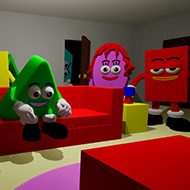
The visual presentation of Save the Shapes is intentionally simple, ensuring that important details are always easy to identify. Shapes and interactive objects are clearly defined, and animations are smooth enough to show exactly how forces are applied. This clarity helps players track movement, anticipate collisions, and understand why a solution works or fails. The interface stays out of the way, supporting uninterrupted gameplay flow.
- Clean and readable visual layout
- Clear separation of active and static elements
- Animations that explain physical behavior
- Interface designed for focus and ease of use
Replay Value and Player Satisfaction
After completing levels, many players return to Save the Shapes to explore alternative solutions or improve efficiency. The consistent rule set makes revisiting earlier stages rewarding, as improved understanding often leads to faster or cleaner completions. This reinforces a strong sense of progression, where skill growth is visible and meaningful rather than tied to upgrades or external rewards.
- Motivation to revisit completed puzzles
- Opportunities to optimize solutions
- Consistent mechanics across all levels
- Long-term engagement through mastery
Save the Shapes offers a balanced puzzle experience that values logic, clarity, and thoughtful interaction. Its carefully structured levels and predictable mechanics create a space where problem solving feels fair and rewarding. Each completed stage reflects improved understanding, making the overall experience both engaging and mentally satisfying.








![Hello Kitty [HORROR] img](https://noimnotahumangames.com/wp-content/uploads/2026/08/hello-kitty-horror.jpg "Hello Kitty [HORROR]")